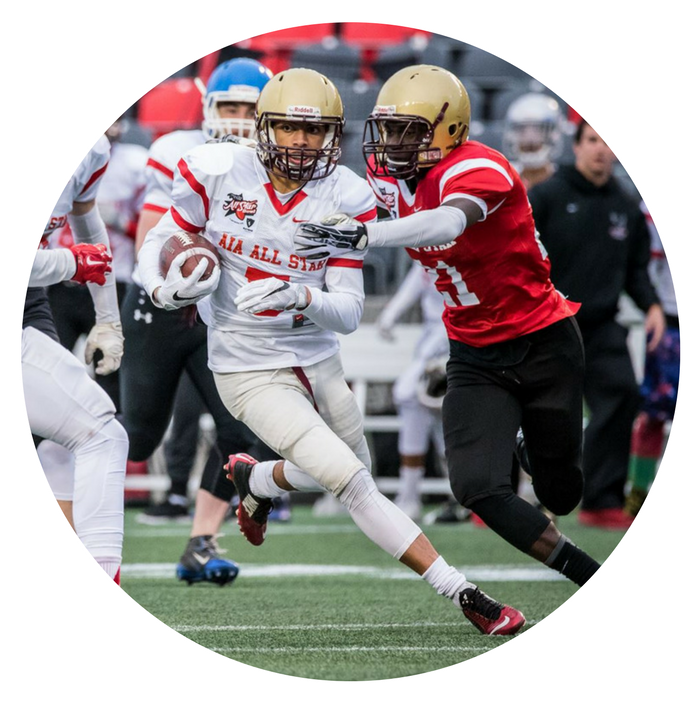

Stories about ourselves depend on the resources our culture gives us — and the world of competitive sport gives us one common storyline for every athlete. But when our own journey doesn't fit, we feel unbalanced. The fix isn't to abandon the story; it's to add more.
Athletes often develop what is known as an athletic identity. A healthy version supports motivation and commitment to sport. But if it becomes too exclusive — the only one we rely on — we leave ourselves open to problems when our sporting life is challenged by injury, poor performance or retirement. The solution: develop more storylines that broaden our identity. [1, 2]
Below are some storylines you could add. They may already be a part of your life — they just need to be expressed or featured more to counteract the dominance of identity coming only from athletic stories. The goal is that your personal development is as important as your performance development, because to perform well, you must be well. [1]
The discovery storyline
You want to see life and sport through a lens of discovery. Life and sport provide a multitude of ways to explore new things. You enjoy these opportunities and challenges, and want a variety of experiences. [3, 4] If sport is increasingly demanding more of your time, energy and attention, can you also begin to view sport through this discovery lens? [2] What are all the ways sport is a discovery process for you beyond skill development? New ways to train, get fit and get strong; learning to be a team member; leadership skills; new friendships; travel.
The relational storyline
Humans were created to be relational. God is one being, and yet a unity of three persons — Father, Son and Holy Spirit — in perfect relational harmony. We are created in His image and likeness (Gen. 1:26). In the creation story, after God made the male He said "it is not good for the man to be alone" (Gen. 2:18) and proceeded to create the female. He blessed them and told them to "be fruitful and increase in number" (Gen. 1:28). We are by design relational beings.
When researchers interviewed young elite athletes, they noticed how individualistic the stories were. Other people's influence was flattened — mentioned, but not central. [2] Do you need to emphasize the importance of the supportive people in your life and include them in your story? A relational narrative could also include your desire to belong — to be part of a group sharing interests, goals and experiences. These are just as important as the wins. [1]
A storyline that includes the present
All good stories have a beginning, middle and ending. In a typical performance-based story the ending is the focus — becoming pro or elite, finishing on the podium. But our story helps construct our identity. So if the focus is continually on the future dream fulfillment, our identity won't be established until that future is realized. Who are you now? How much of who you really want to be is dependent on an accomplishment a few years away? Are you as content with who you are now as you are with who you might be in the future?
The enjoyment storyline
Is your sport still fun? Many athletes say "the day it stops being fun is the day I retire." Others say "it stopped being fun a long time ago." Do you, or some people in your sport environment, view fun as a threat to accomplishment, as a distraction, as immature, as not being committed? When you look back on your career and tell your story, will there be enjoyment memories that aren't just the wins?
The lifestyle storyline
A lifestyle storyline lengthens the sport part of your identity story. It includes the importance of sport beyond the elite years (which honestly do not last very long). Dedication to hard work and great results should not have to eliminate personal well-being and happiness. [2] This storyline desires health as a way of life and brings your personal values into your athletic pursuit. [1]
The emergent storyline
Expectant and open-minded. You are open to whatever life and sport bring you. You don't want to be too specific with where you might be headed. You are still productive and optimistic, but have not foreclosed your story. [6]
The purpose-based storyline
You may have a desire for your sporting experience to express a deeper meaning beyond wins and losses. You want more personal agency — a sense of control. You set goals that are attainable and personally meaningful. Competition is an opportunity to better yourself rather than prove yourself. You don't need authority figures to define the meaning of your storyline. [1, 5]
The hopeful storyline
Almost all stories contain hope. Hope involves the future along with something good in that future for us or others. It includes our dreams for that future and our own confidence of it coming true. Hope is irreal — technically not real or actual yet — but when we hope, we really want that future to be realized.
Remember, your story contributes to your identity. If you only have one strong storyline, full of hopes, and it is not realized, you can experience a foreclosure on your identity. Life can seem like it is over for you. [7] As a wise man wrote: "Hope deferred makes the heart sick, but a longing fulfilled is a tree of life" (Proverbs 13:12). It makes sense to be working on more than one storyline with various hopes.
Athletes in Action, Canada has developed a three-session video series called Hope Assured exploring the relationship of hope, faith and sport.
Build your own
How many of these storylines could you add to your life and sport story? Read them again. Think about which ones are attracted to you, your personality, your lifestyle or your dreams. You can take ideas from various storylines and create your own multifaceted storyline.
Return to the feature article, or work through The Foundation of Our Identity — a four-session study of Genesis 1–3 applied to play and sport.
References
- Haraldsen, H. M., et al., Narrative Tensions in Strained Junior Elite Performers' Experiences of Becoming Elite Performers. Frontiers in Psychology, 2021. 12.
- Ronkainen, N. J. and T. V. Ryba, Developing narrative identities in youth pre-elite sport. Qualitative Research in Sport, Exercise and Health, 2020. 12(4): p. 548–562.
- Douglas, K. and D. Carless, Performance, Discovery, and Relational Narratives among Women Professional Tournament Golfers. Women in Sport and Physical Activity Journal, 2006. 15(2): p. 14–27.
- Carless, D. and K. Douglas, Stories of success. Reflective Practice, 2012. 13(3): p. 387–398.
- Houltberg, B. and L. Wilkenson, Purpose Based Identity. Hope Sports, 2019.
- Smith, B., Disability, sport and men's narratives of health. Health Psychology, 2013. 32(1): p. 110–119.
- Smith, B. and A. C. Sparkes, Men, sport, spinal cord injury, and narratives of hope. Social Science & Medicine, 2005. 61(5): p. 1095–1105.
Dave writes on faith, sport and identity for Athletes in Action.