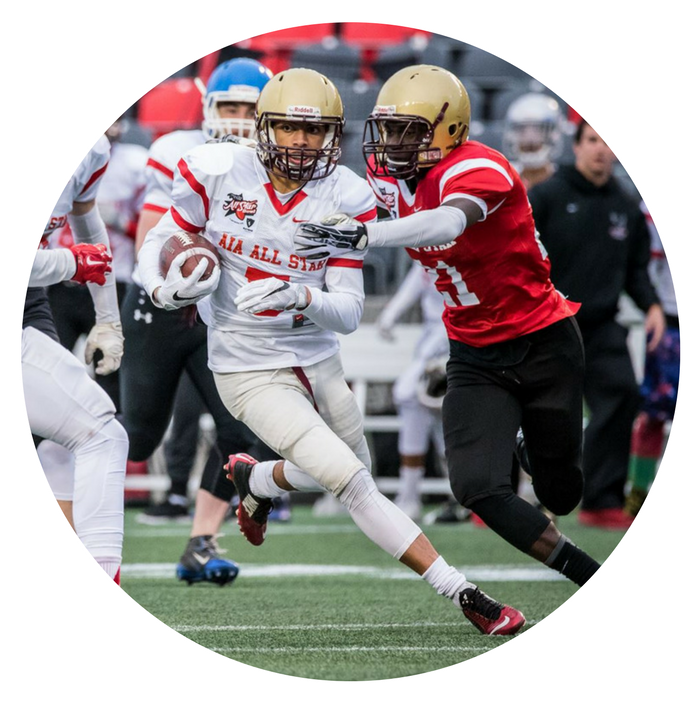

Did you ever spend time as a kid creating your "famous athlete story"? You know the one — playing in the FIFA World Cup final, scoring the overtime winner to lift the Stanley Cup. I even gave the live commentary about that goal during the games I played as a kid: "what an amazing effort as he bangs home the winner to secure the Cup!" As you pursued some of those dreams, your own story unfolded — and through that story you began to declare who you were to the world.
Who am I? and What is my identity? are popular questions these days. Some researchers are discovering that our life story — the story we tell ourselves and tell others — is one way that we shape and form our identity.
One researcher writes that it is "through narrative (stories) we define who we are, who we were, and where we may be in the future" and "as individuals construct past events and actions in personal narratives they engage in a dynamic process of claiming identities and constructing lives." [1] Another puts it this way: "Stories have been recognised as one primary way people give meaning to life experiences." [2]
As we create and share our story, we make sense of our life. Our identity is formed as we create, tell, revise and re-tell our story. Our narrative gives us a sense of self-cohesion, helps tell us where we fit in, and can influence our motivation. [3] Our life story and our identity are "intertwined" and maybe inseparable. [1, 4, 5]
Where does my story come from?
The culture we grow up in, and the various sub-cultures we are a part of (like our sport teams), often give us general storylines that act as a guide to tell us how life "should be lived." They give us the framework — the template — for how we should tell our story to others. Each of us has our own personal story but it has likely been shaped by these cultures we are part of. [5, 6] Some scholars argue that our identity stories are always dependent on the cultural narratives available to us. [7]
Each individual sport has its own subculture, and that culture has values, assumptions, and "life scripts" that can shape our identities. [7] In other words, each culture has an accepted storyline or plot that is repeated over and over. In organized sport, this storyline prefers a certain identity for you as the athlete, expects certain behaviours from you, and assumes you will take a certain path in your athletic development. [4]
The most accepted, strongest storyline in the world of sport has been called the Performance Narrative. It is the story of the focused, dedicated athlete — and much of the plot is your results, your achievements, and of course winning. As your sport culture becomes more serious, performance concerns influence more areas of your life. It might be your decision, or there could be pressure from others, to reduce time spent on areas of life that don't contribute to the dominant story line. This story is the most common because it is the one you hear most: told and re-told by athletes, coaches, decision-makers and the media. The performance narrative is "where athletes present a monological and linear narrative, solely focusing on sport performance and success." [2]
A performance-based identity
If our story does indeed help us develop our identity, a performance narrative can create in us what is known as a performance-based identity — much of our identity comes to rest on our performance as an athlete. This happens because performance is the most common story our particular sport culture is encouraging us to tell. [1, 5, 7, 8] If this performance-based identity becomes exclusive, other facets of life can get neglected so that our performance goals can be achieved. [9]
Are we saying that you shouldn't be committed, hard-working and focused as an athlete? No, not at all. Those traits and habits help us grow and improve in the sport we love and often translate into other areas of life.
But when these good efforts become the means by which we try to live up to the storylines of great performance — meeting the storyline's expectations or the approval of significant others in sport — they also become our identity developer. [10] These efforts become how we define who we are. As one writer put it: "an impressive work ethic can actually be a mask that is hiding a performance-based identity." [11]
A strong identity based on your sport experiences is known as an "athletic identity," which can be helpful to your motivation and commitment. But if it becomes exclusive, you can become susceptible to psychological distress.
If your performances don't match the expected ideal, your personal identity becomes vulnerable. [10] You can become perfectionistic, develop a fear of failure, and become motivated to avoid losing instead of doing your best. [11] Explore your own identity formation in the Exploring My Identity worksheet.
From the love of play to serious sport
When you were a kid competing in organized sports, you may have figured out — consciously or unconsciously — that as you became more skilful you also gained more recognition within your circle of friends and family. As your performance or winning increased, so did the recognition and esteem from coaches, fans and maybe even the media. [1, 13]
Initially you may have brought other important "stories" into your sport: I want to include my friends and family on this journey. I want to discover new skills and abilities. But sometimes those stories were trivialised or rejected by the influential people around you. The most important theme you may have kept hearing was simply: keep working harder. [2]
Walk through your own journey from the love of play to entering serious sport in My Journey Through Play and Sport.
Have you experienced the costs?
Sometimes the story gets reduced to: winning is the only reason to play, winning defines what success really means, and those are the only beliefs the best athletes have. As one athlete said: "I couldn't be successful without it being the most important thing in my life." And another: "I think that all of us, it becomes our whole life." [14]
This storyline can work well — it can give meaning to your life — as long as the story is not interrupted. But what if you experience a slowdown, an injury that takes you out for a while, get benched, get sent down to the tier-2 squad? Who are you now? These interruptions and the disappointment that follows can get mixed in with a loss of identity. [15] All cultures supply us with typical stories, but sometimes our personal experiences don't live up to them and their built-in expectations. That, too, can leave us not knowing who we are. [16]
The story you tell about yourself needs to line up with the dominant narrative type in your culture. If it doesn't, you can struggle to adapt — mental health problems can surface, or even as a team member you may feel socially excluded or less privileged. [7] Read more in The Costs and Consequences of the Performance Narrative.
The need for more stories in your life
Some experts propose a solution: make sure there are more storylines in your life instead of just one dominant storyline that depends on consistent and increasing performance.
- A relational narrative — where you maintain and prioritize the important relationships in your life. Family traditions stay strong, and you make time for significant others. This will be a challenge, as those who push the performance narrative can sometimes view serious relationships as a threat to your success. [4, 5]
- A discovery narrative — yes, you want to perform; winning is the goal. But you still find deep joy in developing skills and discovering new strategies. Sport becomes the road you are taking to discover new experiences in life. [14] This can also be a form of success. [15]
If your identity includes many facets — not just performance — evidence suggests you'll have greater mental health, well-being and resilience. [17] And research shows that a person can be successful at the elite level without following the performance narrative. [5]
Explore many more possibilities in Discovering and Evaluating Other Storylines.
Claiming a foundational story
But is there a greater story we are part of? A story that tells us where we have come from and where we are going? A story that not only contributes to our identity but might even define who we are? Do we have to invent our identity through sport, our credentials, our education, our career? Or does it come from something — Someone — greater than ourselves? If narratives are crucial to help us understand and explain to the world who we are, then we all need a story that gives us deep, personal significance. [7]
Interestingly, the Judeo-Christian scriptures begin with a fascinating story — the Creation story. And like a good story, it starts with "In the beginning…"
In that brief but extraordinary story that opens the Bible (Genesis 1–3), we are introduced to the God who started it all as He made His "very good" creation (Gen. 1:31). We get a glimpse into our origins, and the stage is set for human history.
- Could this be the foundational story that tells us where we came from?
- Could we find out who we are — both magnificent physical and intellectual creatures, and broken beings in need of divine help and guidance?
- Could we discover that our bodies can also be celebrated as wonderfully made? (Ps. 139:14)
- God was certainly creative in that story — and because we are made in His image, perhaps that's why we enjoy play so much. Play is intrinsically creative. We humans are continually creative as we play, always inventing new sports and new ways to play, because our God is creative.
- Through that story we recognize that, because we and all humans are stained and broken by our sin, sport culture is also broken.
- We begin to see that God takes initiative in the creation story and starts the reconciliation process that can change our lives — and the lives of those in sport culture. Could this story also help redeem the brokenness of sport?
As we learn from and apply the creation story, could it be the alternative narrative we cling to while pursuing a journey inside the culture of competitive sport? The creation story is both mysterious and reflects reality. The Storyteller is the author and perfecter of our faith (Heb. 12:2).
Work through a four-session Bible study on Genesis 1–3 applied to play and sport in The Foundation of Our Identity.
Your "Jesus story" is your ongoing identity formation
The Bible is the long story of God revealing Himself to people and cultures for thousands of years and preparing the world for the arrival of Jesus. He is the promised solution God gave to Adam and Eve in Genesis 3:15, 21.
We learn about Jesus through the stories told about Him in the Gospels of Matthew, Mark, Luke and John. Jesus Himself was a storyteller and used parables to teach His audience — and us — about the Kingdom of God. God uses stories to tell us who we are. It is these stories that help develop our true identity.
One researcher introduces the idea that as we tell our stories a "narrative thread" develops, and this becomes the core of our identity and sense of self. [5] Another writes that "the core of our identity is really a narrative thread that gives meaning to life provided — and this is the big if — that it is never broken." [15] But in the sport world, the common narrative thread is often broken: when you don't meet performance expectations, when you are benched, injured, slumping or cut. It can be fully broken when your career ends. One author even suggests an involuntary retirement is a form of "biographical disruption." [6] Another says that if we get stuck in the values of the performance narrative, it can keep us from moving ahead and growing in our life after sport. [2]
And let's be honest — a journey with Jesus can also be challenging. It can feel disruptive, and many times confusing, as we try to discern His plan for our lives. But the thread of His story will not be broken. As He promised the thief next to Him in the agony of the cross: "Today you will be with me in paradise" (Luke 23:42). Because of His resurrection, eternal life is guaranteed to all who trust in Him (John 3:16). What a great story.
Applying your personal faith story
Since the biblical story is one of God revealing Himself to people and inviting them into relationship with Him, our story can be connected to His story. We are all on a journey toward God as we learn about, or respond to, His revelation. If the Genesis story is our foundational story, our own journey of responding to Jesus — who is the Word become flesh and dwells among us (John 1:14) — is our ongoing personal faith and salvation story.
Some researchers have said that Christian athletes are continually negotiating their identity within numerous competing narratives — some based on faith, others embedded in our culture. [18] We need to embrace His story for our lives.
Theologian K. N. Forti reminds us that the story of Jesus is a very complete story: "Jesus Christ draws together the narrative of all creation. His story begins with the first moment of creation and points to the fulfillment of all time." [19] We are all part of that story.
And this matters: it's not just gathering the facts of a story — whether the creation story, the gospel story or your own story — that builds your identity. Your identity develops as you ascribe meaning and value to those facts. [20] What could be more meaningful than the fact that you have a loving God who made you and rescued you?
Conclusion
God has provided a foundational story that can become our worldview — a lens to view and interpret the world around us. This gives us stability and an unchanging view of ourselves and our sport culture as we face the challenges of competitive sport and a rapidly changing culture. Jesus Himself continues to shape our personal story as we apply His teaching, life example, death and resurrection to our lives. These stories define our lives — and so set us free from the Performance Narrative that the world of sport offers us.
Need help starting your relationship with Jesus? Explore Knowing God Personally, or work through Preparing Your Personal Testimony.
References
- Douglas, K. and D. Carless, Abandoning the Performance Narrative: Two Women's Stories of Transition from Professional Sport. Journal of Applied Sport Psychology, 2009. 21(2): p. 213–230.
- Cavallerio, F., R. Wadey, and C. Wagstaff, Adjusting to retirement from sport: narratives of former competitive rhythmic gymnasts. Qualitative Research in Sport, Exercise and Health, 2017.
- Houltberg, B. J., et al., Self-Narrative Profiles of Elite Athletes and Comparisons on Psychological Well-Being. Research Quarterly for Exercise and Sport, 2018. 89(3): p. 354–360.
- Carless, D. and K. Douglas, Living, resisting, and playing the part of athlete: Narrative tensions in elite sport. Psychology of Sport & Exercise, 2013. 14(5): p. 701–708.
- Carless, D. and K. Douglas, "In the Boat" but "Selling Myself Short": Stories, Narratives, and Identity Development in Elite Sport. Sport Psychologist, 2013. 27(1): p. 27–39.
- Brown, G. and P. Potrac, 'You've not made the grade, son': de-selection and identity disruption in elite level youth football. Soccer & Society, 2009. 10(2): p. 143–159.
- Ronkainen, N. J., A. Kavoura, and T. Ryba, Narrative and discursive perspectives on athletic identity: Past, present, and future. Psychology of Sport and Exercise, 2016. 27: p. 128–137.
- Cahak, R. M. Who I Am is Not What I Am: The Curse of Performance-Based Identity. 2020.
- Jones, L., A. Parker, and G. Daniels, Sports Chaplaincy, Theology and Social Theory: Disrupting Performance-Based Identity in Elite Sporting Contexts. Religions, 2020. 11(12): p. 660.
- Jones, R., N. Glintmeyer, and A. McKenzie, Slim Bodies, Eating Disorders and the Coach-Athlete Relationship: A Tale of Identity Creation and Disruption. Vol. 40. 2005. 377–391.
- Houltberg, B. and L. Wilkenson, Purpose Based Identity. Hope Sports, 2019.
- Ronkainen, N. J. and T. V. Ryba, Developing narrative identities in youth pre-elite sport. Qualitative Research in Sport, Exercise and Health, 2020. 12(4): p. 548–562.
- Adler, P. and P. Adler, The Glorified Self. Social Psychology Quarterly, 1989. 52(4): p. 299–310.
- Douglas, K. and D. Carless, Performance, Discovery, and Relational Narratives among Women Professional Tournament Golfers. Women in Sport and Physical Activity Journal, 2006. 15(2): p. 14–27.
- Carless, D. and K. Douglas, Stories of success: Cultural narratives and personal stories of elite and professional athletes. Reflective Practice, 2012. 13(3): p. 387–398.
- Carless, D., Who the Hell Was That? Stories, Bodies and Actions in the World. Qualitative Research in Psychology, 2010. 7(4): p. 332–344.
- Haraldsen, H. M., et al., Narrative Tensions in Strained Junior Elite Performers' Experiences of Becoming Elite Performers. Frontiers in Psychology, 2021. 12.
- Daniels, G., Parker, A., Christianity, Identity, and Professional Football. Religions, 2023. 12(1280).
- Forti, K. N., Persons and Narratives: A physicalist account of the Soul, in The Resounding Soul. Cascade Books, 2015.
- Bauer, J. J. and D. P. McAdams, Competence, Relatedness, and Autonomy in Life Stories. Psychological Inquiry, 2000. 11(4): p. 276–279.

Dave writes on faith, sport and identity for Athletes in Action.