If play and sport has always been an important part of your life, it's natural that it would contribute to how you see yourself and how you present yourself to others. This is your story. There are no right or wrong answers.
Below is a list of stages that will take you through your personal journey in play and sport. Work through them on your own or in a group of fellow athletes. For each stage, post on your own timeline a word, a phrase or a picture that summarizes your answer.
Before you begin this exercise, complete Exploring My Identity: How did I become who I am?
My childhood and the attraction of play
- What is your first memory of playing as a child? How old were you? Where were you? Who were you with?
- What forms of play have you always been attracted to? Pick as many as apply, and add others not on this list:
- the joy of physical movement
- the challenge of learning something new
- developing and perfecting a physical skill
- being part of a group
- being alone and fully engaged in the activity
- competing against others — who is best today?
- competing against yourself — how good can I get?
- cooperating with others to achieve a goal
- figuring out a strategy or game plan
- going for the win
My journey from play to sport
- How old were you when you first played organized sport? Why did you start? Who influenced your decision?
- When did you first watch or experience your favourite sport, or the sport you focus on now? What about it interested you?
- When did you start thinking that you had the potential to be an elite athlete?
Sport influences and influencers in my life
- Who were your sport role models — siblings, parents, athletes you wanted to follow?
- Who was your first sports idol — an elite athlete whose number you wore, whose jersey you bought? What about them fascinated you?
- Who gave you, or modeled for you, a love for the game? How does that affect the way you approach your sport each day?
My being known as an "athlete"
- What is your first memory of being complimented or admired for playing well or being good? How old were you? How did it feel?
- Did you change the way you played, play harder, or do anything to increase those compliments or recreate that feeling? Do you continue to do that now?
- When were you first recruited or encouraged to play at a higher level? How did that feel — excitement, anticipation, fear, couldn't-wait-to-get-started?
- Identity is related to roles. I am a sister. I am a student. I am a carpenter. When do you think you may have started saying "I am an athlete"? What experiences helped you see yourself that way?
My appearance as an "athlete"
- Does your body reflect athleticism? How important is it to you to look athletic?
- How important is it to you to be seen as an athlete by others?
My growing competence as an "athlete"
- Do you feel you are more athletic than most people? Is that important to you?
- When you compare yourself to other athletes, athletic friends or teammates, how do you measure up?
The relationships in my sporting world
- What percentage of your friends are athletes? How much of your social circle is comprised of other athletes or people involved in sport?
- Do you enjoy playing with less skilled or athletic people just for fun? Why or why not?
The growing importance of sport in my life
- When did you start sacrificing time or activities from one area of life in order to make more time for sport? What have you given up?
- How much does your daily or weekly schedule revolve around sport? Do you move other activities around to keep your training and game schedule?
- Trace how the role/identity of being an athlete has grown in your life over time. Compared to family, school, hobbies, other interests — when has sport been on the top of your list as a young child, pre-teen, early teen, late teen, early adult?
- Would the statement "I am an athlete" be one of the most important things you would state about yourself?
- Have you lost or hurt certain relationships as a result of your devotion to sport?
My commitment to sport
- Have you missed an important social or life event to keep an athletic commitment? A birthday, graduation, wedding, funeral?
- Has your commitment to sport influenced how you have approached your academic choices? Less rigorous faculty, fewer courses, courses with less homework?
- Do you have a plan to compete at a higher level than you are right now?
The positive effect of sport in my life
- How do you feel about yourself, or describe yourself, when you play well or win?
The negative effect of sport in my life
- What is your first memory of being chastised, scorned, yelled at or punished for not playing well? How old were you? How did you respond? How do you respond now?
- How do you feel about yourself, or treat yourself, after you lose?
- How have you handled not playing due to injury — emotionally, in terms of how you spend your time?
My future sport goals and dreams
- What athletic goals do you have beyond your current level?
- How long do you estimate it will take to get there?
- How important will sport be to you in 5, 10, 20, 30 years?
- How do you think you will handle retirement from serious competition?
Now walk through these same categories alongside Scripture in Identity Truths: What God Declares About You.
References
- Newton, J., D. L. Gill, and E. Reifsteck, Athletic Identity: Complexity of the "Iceberg". Journal of Athlete Development and Experience, 2020. 2(2).
- Harrison, C., et al., I am what I am? The Baller Identity Measurement Scale. Sport Sciences for Health, 2014. 10: p. 53–58.
- Anderson, C. B., Athletic Identity and Its Relation to Exercise Behavior. Journal of Sport & Exercise Psychology, 2004. 26(1): p. 39–56.
- Lochbaum, M., S. Cooper, and S. Limp, The Athletic Identity Measurement Scale: A Systematic Review. European Journal of Investigation in Health, Psychology and Education, 2022. 12(9): p. 1391–1414.
- Mitchell, T. A., et al., Validation of the Athletic Identity Measurement Scale in Youth Academy Soccer Players. Journal of Athlete Development and Experience, 2021. 3(3): p. 198–211.
- Crocker, J., et al., Contingencies of Self-Worth Scale. 2012.
- Graham, D. N. and G. N. Burns, Athletic Identity and Moral Development. International Journal of Sport Psychology, 2020. 51: p. 122–140.
- Brown, G. and P. Potrac, 'You've not made the grade, son'. Soccer & Society, 2009. 10(2): p. 143–159.
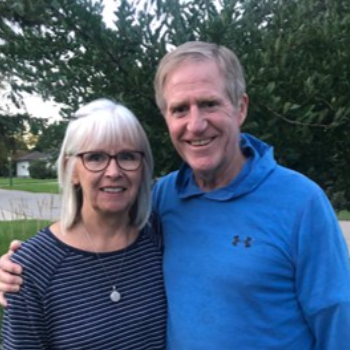
Dave Johns
Dave writes on faith, sport and identity for Athletes in Action.